2 Hours Daily, that's how much time a real estate broker was losing to manual data collection & unintended follow-ups.
Handling legal agreement data should be reliable, not overwhelming. This platform transforms fragmented communication into a structured, system-driven workflow.
A guided system, smart validation, and automated outputs help eliminate manual errors while improving efficiency across the entire process.
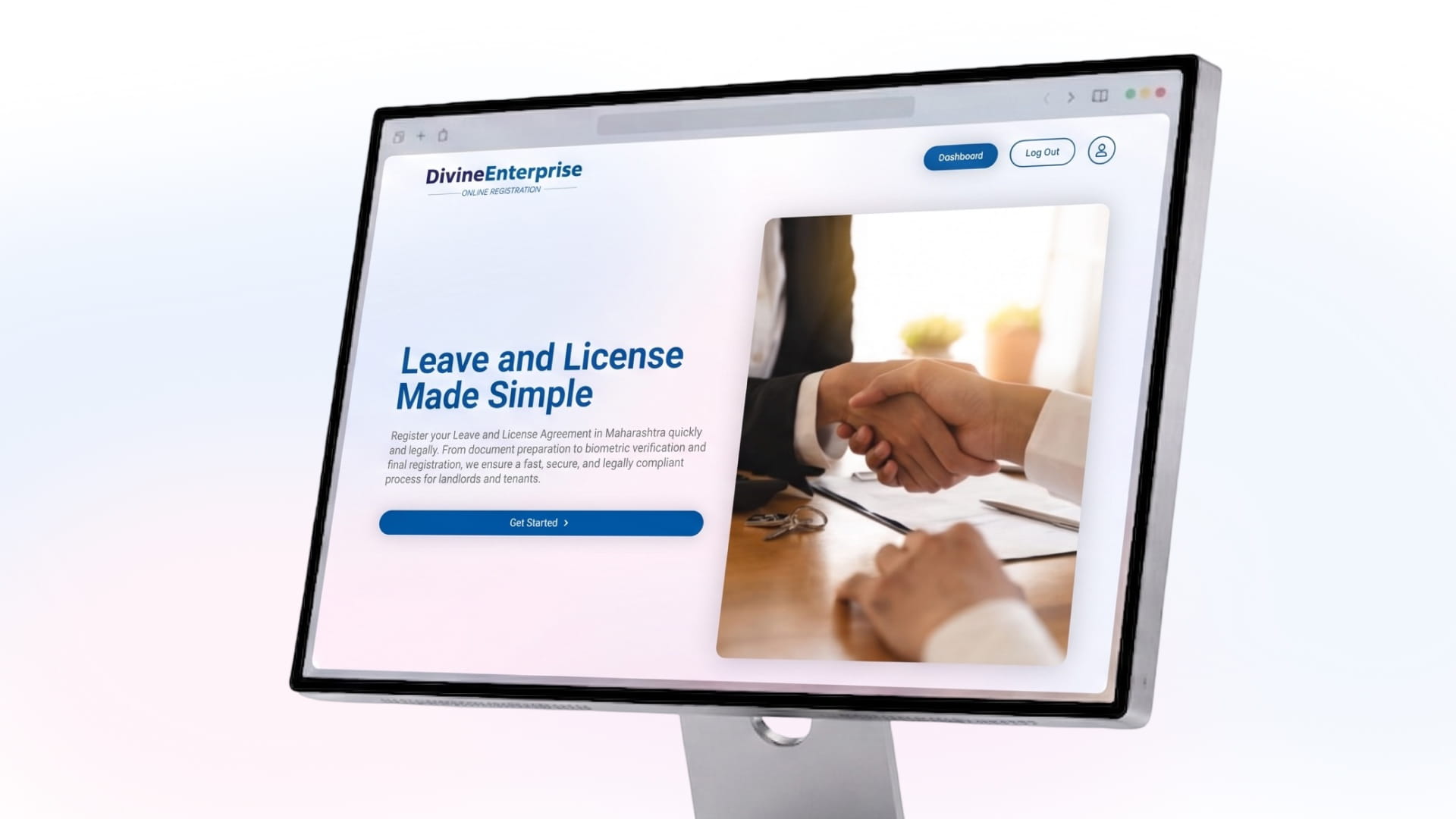
The landing page appeals to high-achieving millennials and Gen Z professionals, think founders, traders, consultants, and creatives who equate real estate with a personal milestone. It’s not just about a home; it’s about claiming a view they once dreamed of from a tiny apartment window.
The broker’s workflow was manual, inconsistent, and time-consuming:
➙ Data collected via calls, WhatsApp, and handwritten notes
➙ Information often missing, unstructured, or inconsistent
Staff had to reformat data into documents, follow up repeatedly for missing details
No centralized storage, risk of data loss,
broker heavily involved in operations, limited time for business growth
Result: Low efficiency, repeated work, and operational bottlenecks
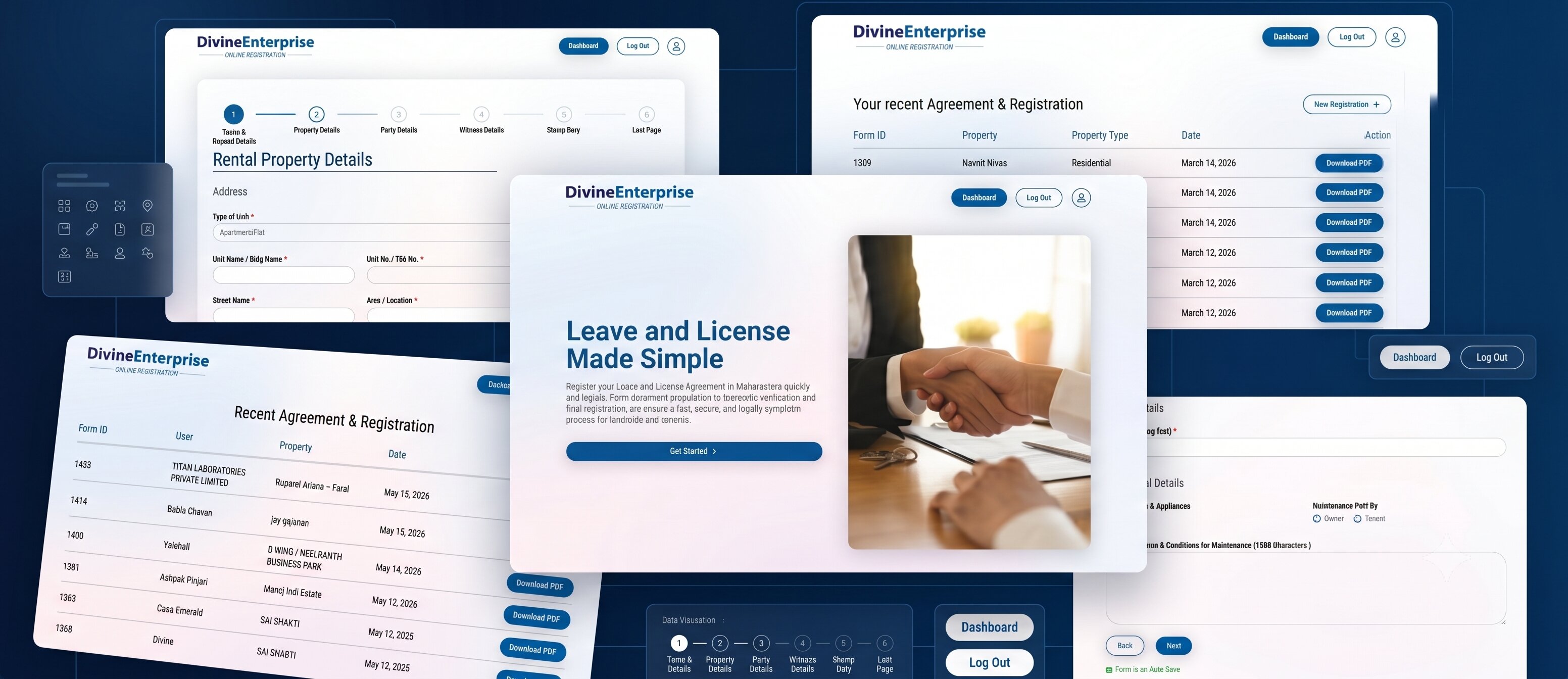
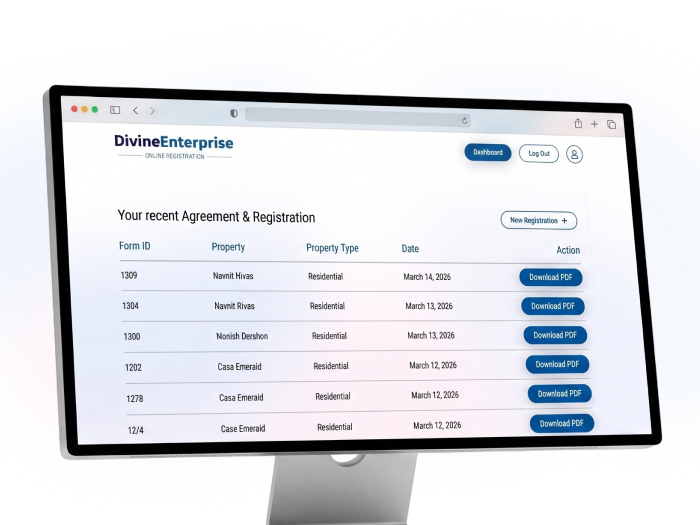
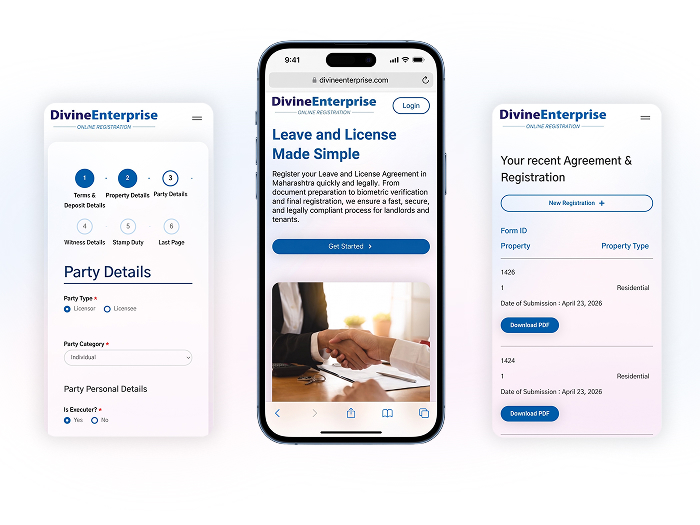
A centralized portal was introduced to streamline agreement data collection, standardize information capture, and automate document generation. By guiding users through a structured workflow and storing all submissions in one place, the system reduced manual effort, minimized follow-ups, and enabled faster, more accurate agreement processing.
Result: A scalable workflow that improved productivity, reduced operational overhead, and freed up valuable time for business growth.
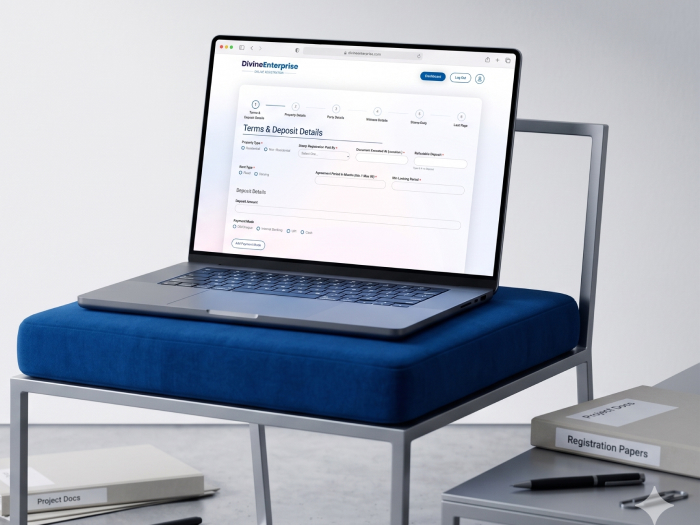
The agreement process required users to enter a large amount of information, much of which depended on previous selections. Instead of presenting everything on a single page, I used a multi-step form with progressive disclosure to break the task into smaller, manageable sections. This reduced cognitive load, helped users focus on one category of information at a time, and made the overall process feel less intimidating despite the form's complexity.
The visual design focused on trust and clarity. A blue-based color palette, clean typography, and structured layouts helped create a professional experience for users sharing sensitive personal and property information.